Windows 101 - The Start Menu
Windows 101: The Start Menu
In this lesson, we’ll take a closer look at your specific Start Menu setup, which provides access to all your programs and power options. Understanding how to navigate this menu will help you quickly find what you need.
The App List
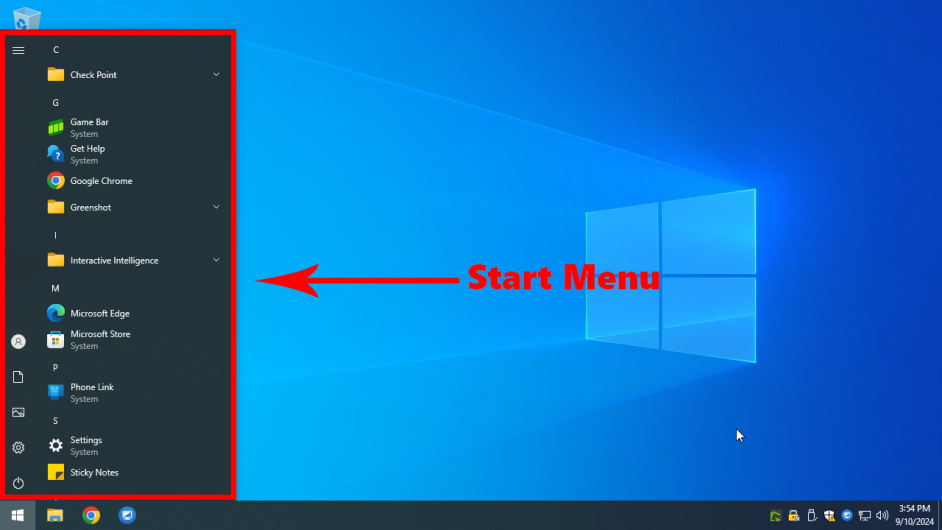
Your Start Menu contains a single section: the app list. This is an alphabetical list of all the programs installed on your computer. You can easily scroll through it to find the application you want to use.
- The app list starts with system apps, like the Calculator and Calendar, followed by more specialized software installed on your computer.
- Some programs may have a small arrow beside them, indicating they contain additional sub-programs or tools. Clicking the arrow will expand these items to show what's available.

Searching for Programs
Even though the search bar isn’t visible in your Start Menu, you can start typing as soon as the Start Menu is open to search for programs. Windows will automatically detect your input and show relevant results.
For example, if you want to open Google Chrome, simply open the Start Menu, start typing "Chrome," and click on the result when it appears.
[gif] showing how to search for programs by typing in the Start Menu
Power Options
At the very bottom of the Start Menu, you’ll find the Power button. This button provides essential power management options for your computer. In your setup, we only use the following options:
- Shut Down: Turns off your computer completely.
- Restart: Restarts your computer, which is useful when updates are installed or when troubleshooting issues.
The Sleep option is not used, so you can safely ignore it.
[picture] showing the Power button and options
Now that you know how to navigate your specific Start Menu and use its features, accessing your programs and managing power options will be easier. In the next lesson, we’ll explore Context Menus, which give you additional options when you right-click on items in Windows.